Old World vs New World Pinot Noir
Pinot Noir is the grape that shows where it grew more clearly than any other, so the same variety produces two recognisably different wines depending on which side of the Atlantic it comes from. The shorthand is fruit versus earth, and like most shorthand it is half right. The more useful distinction is what the wine is trying to be: New World Pinot Noir is generally made to taste delicious now, Old World Pinot Noir is generally made to taste like somewhere.
Old World (Burgundy)
Burgundy is the origin and still the reference. Cooler sites, older vines and a classification system built around individual parcels produce wines with less obvious fruit, more savoury and earthy detail, and a structure that expects to be waited for. The hierarchy runs from regional through village and Premier Cru to Grand Cru, and the price climbs steeply with it.
Choose it if
- You want savoury complexity more than ripe fruit
- You are prepared to cellar a bottle for five years or more
- You are pairing with game, mushrooms or aged cheese
- You are buying for someone who already drinks Pinot Noir
From our cellar
 Faiveley Charmes Chambertin Grand Cru 2022$265 · 96 pts→
 Henri Rebourseau Charmes-Chambertin Grand Cru 2019$325 · 98 pts→
 Domaine Faiveley Chambertin Clos de Beze Grand Cru 2019$495 · 98 pts→
New World (US)
Oregon’s Willamette Valley and California’s coastal appellations — Sonoma Coast, Anderson Valley, Santa Maria — make Pinot Noir with riper fruit, softer acidity and more immediate appeal. Styles vary widely within that: Sonoma Coast can be as taut and mineral as anything from Europe, while Santa Maria leans opulent and sweetly spiced.
Choose it if
- You want to open the bottle tonight rather than in 2032
- You prefer bright, generous fruit to earth and savour
- You want a serious Pinot Noir under $100
- You are pouring for a mixed table that is not all wine drinkers
From our cellar
 Flowers Sonoma Coast Pinot Noir$55 · 93 pts→
 Goldeneye Anderson Valley Pinot Noir$62 · 92 pts→
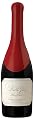 Belle Glos Clark & Telephone Pinot Noir$55 · 94 pts→
 Domaine Serene Evenstad Reserve$85 · 95 pts→
Side by Side
| Burgundy | US | |
|---|---|---|
| Fruit profile | Red cherry, cranberry, restrained | Raspberry, plum, dark berry, generous |
| Savoury notes | Forest floor, mushroom, spice — prominent | Present but usually secondary to fruit |
| Acidity | High | Medium to high |
| Oak | Restrained, in support | More visible — vanilla, sweet spice |
| Drink now? | Often needs 5+ years | Usually ready on release |
| Entry price for quality | $265 in our cellar | $55 in our cellar |
| Labelled by | Place — the vineyard or village | Grape, then region |
What Our Own Scores Show
The seven Pinot Noirs we have scored make the price gap unusually clear. Our four American bottles run $55 to $85 and score 92 to 95 points; our three Burgundies run $265 to $495 and score 96 to 98. That is roughly three extra points for four to six times the money — which is either absurd or entirely reasonable depending on what you are buying it for. Flowers Sonoma Coast at $55 took 93 points and was, in our note, light on its feet with crunchy red fruit; Faiveley Charmes-Chambertin at $265 took 96 with tannins polished to near-invisibility. The Burgundy is better. It is not five times better, and nobody sensible claims it is. What the extra money buys is a kind of detail and length that the American bottles, at their price, are not attempting.
The Verdict
For everyday drinking and for most dinners, the American bottles are the rational purchase and there is no shame in it — our highest-scoring US Pinot Noir cost less than a third of our cheapest Burgundy. Buy Burgundy when the wine is the occasion rather than an accompaniment to it, when you have somewhere to store it properly, and when you actually want the savoury, earthy register rather than ripe fruit. If you are trying Burgundy for the first time, do not start at Grand Cru: the style is what you are testing, not the ceiling.
Common Questions
Is Burgundy always better than California Pinot Noir?
No. Burgundy sets the reference for the savoury, structured style, but it is also inconsistent and expensive, and a poor Burgundy is worse value than almost anything. Good coastal California and Oregon Pinot Noir is more reliable at every price under about $100.
Why does Burgundy cost so much more?
Supply. The best Burgundy vineyards are tiny, legally fixed in size, and often split between many owners, so production cannot expand no matter how demand grows. Add low yields, difficult vintages and centuries of reputation, and prices climb steeply.
What does "earthy" actually mean in Pinot Noir?
Aromas that are not fruit: forest floor, damp leaves, mushroom, cured meat, wet stone. They come partly from cooler ripening and partly from the winemaking, and they tend to grow more prominent as the wine ages and the primary fruit recedes.
Which should I buy as a gift?
If the recipient already drinks Pinot Noir seriously, a village or Premier Cru Burgundy makes the better impression. If you are not sure, an Oregon or Sonoma Coast bottle is far more likely to be opened and enjoyed rather than put away and forgotten.
Ready to Buy?
Our picks for both sides of this question.