Cabernet Sauvignon vs Pinot Noir
These two grapes are the usual fork in the road for anyone buying red wine, and they are about as unalike as two red wines can be. Cabernet Sauvignon is built on structure: thick skins, firm tannin, dark fruit, and a frame that holds up for decades. Pinot Noir is built on transparency: thin skins, little tannin, bright acidity, and a habit of tasting like the specific patch of ground it grew on. Neither is the better grape. They answer different questions.
Cabernet Sauvignon
The world’s most planted red grape, and the one most people picture when they picture red wine. Thick skins give it colour, tannin and the ability to age; ripe New World examples add cassis, cocoa and sweet oak on top of that frame. It is the safe answer at a steakhouse and the reliable answer as a gift.
Choose it if
- You are pouring it with red meat, hard cheese or anything grilled
- You want a bottle that will still be improving in ten years
- You would rather spend $60 than $250 and still drink something serious
- You like a wine that fills the mouth and finishes long
From our cellar
 Austin Hope Paso Robles Cabernet Sauvignon$58 · 95 pts→
 Duckhorn Napa Valley Cabernet Sauvignon$72 · 91 pts→
 Caymus Vineyards Cabernet Sauvignon$95 · 92 pts→
 Silver Oak Alexander Valley Cabernet Sauvignon$105 · 96 pts→
 Chateau Montelena Estate$185 · 97 pts→
 Cardinale Cabernet Sauvignon 2021$295 · 99 pts→
Pinot Noir
Thin-skinned, difficult to grow, and famously unforgiving — which is exactly why it is prized. Low tannin and high acidity make it the most food-flexible red in the cellar, and its transparency means a Sonoma Coast bottle and a Côte de Nuits bottle taste like different wines rather than different labels.
Choose it if
- You are eating salmon, duck, mushrooms or anything in between
- You find big tannin drying or bitter
- You want a red that works served slightly cool
- You care more about aroma and detail than weight
From our cellar
 Flowers Sonoma Coast Pinot Noir$55 · 93 pts→
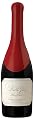 Belle Glos Clark & Telephone Pinot Noir$55 · 94 pts→
 Goldeneye Anderson Valley Pinot Noir$62 · 92 pts→
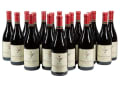 Domaine Serene Evenstad Reserve$85 · 95 pts→
 Faiveley Charmes Chambertin Grand Cru 2022$265 · 96 pts→
 Domaine Faiveley Chambertin Clos de Beze Grand Cru 2019$495 · 98 pts→
Side by Side
| Cabernet | Pinot Noir | |
|---|---|---|
| Body | Full | Light to medium |
| Tannin | High and firm | Low and silky |
| Acidity | Medium | High |
| Core flavours | Blackcurrant, cedar, cocoa, tobacco | Red cherry, cranberry, rose, forest floor |
| Serving temperature | 63–65°F (17–18°C) | 55–60°F (13–16°C) |
| Classic pairing | Ribeye, lamb, aged cheddar | Salmon, duck, mushroom risotto |
| Cheapest bottle we scored 95+ | $58 | $85 |
| Decanting | Usually rewards 30–60 minutes | Rarely needs it |
What Our Own Scores Show
Across the bottles we have scored, Cabernet reaches a high standard far more cheaply than Pinot Noir does. Austin Hope Paso Robles took 95 points at $58; the least expensive Pinot Noir to reach 95 in the cellar is Domaine Serene Evenstad Reserve at $85, and every Burgundy we have scored above it costs $265 or more. At the very top the gap widens rather than closes — our highest-scoring Cabernet, Cardinale 2021, took 99 points at $295, while Domaine Faiveley Chambertin Clos de Bèze took 98 at $495. If your budget is under $80, Cabernet is simply the better bet for quality per dollar. Pinot Noir earns its price at the top, not at the bottom.
The Verdict
Buy Cabernet Sauvignon when the food is rich and the occasion wants weight, or when the budget is tight and you still want something that tastes expensive. Buy Pinot Noir when the meal is varied, when the table includes fish as well as meat, or when you would rather have detail than power. If you are building a cellar rather than buying dinner, Cabernet ages more reliably and forgives storage mistakes that Pinot Noir does not.
Common Questions
Is Cabernet Sauvignon or Pinot Noir sweeter?
Both are dry wines, so neither is sweet in the technical sense. Cabernet Sauvignon often tastes sweeter because ripe New World fruit and new oak give impressions of cassis, vanilla and cocoa. Pinot Noir’s higher acidity makes it read as tarter even when the residual sugar is identical.
Which is easier to drink for a beginner?
Pinot Noir is usually gentler, because low tannin means none of the drying, astringent grip that puts new drinkers off red wine. That said, a soft, ripe Cabernet such as Caymus is deliberately made to be approachable, with tannins so integrated they barely register.
Which one goes with steak?
Cabernet Sauvignon. Its tannins bind to fat and protein, which softens the wine and makes the meat taste more savoury. Pinot Noir can work with a leaner cut, but with a fatty ribeye it tends to be overwhelmed.
Why is good Pinot Noir so expensive?
Pinot Noir is thin-skinned, prone to disease, and highly sensitive to site and vintage, so yields are low and failures are common. The most sought-after examples come from tiny parcels in Burgundy where the total supply is fixed and cannot expand.
Ready to Buy?
Our picks for both sides of this question.